
Best Areas to Buy Apartments in Dhaka for Long-Term Investment (2026 Guide)
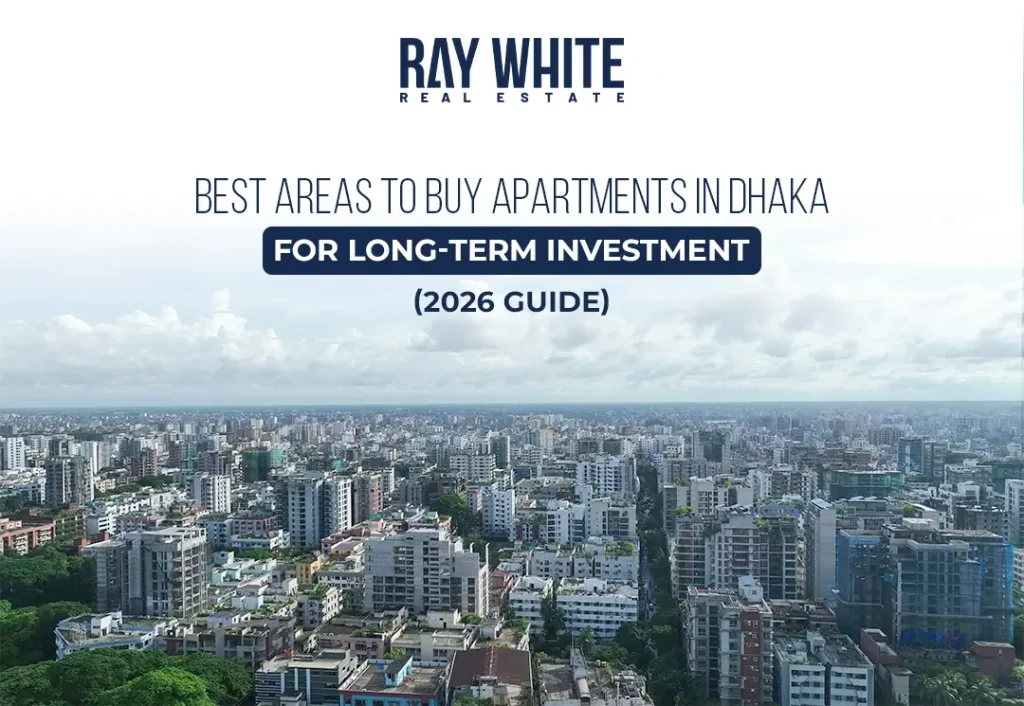
Dhaka’s property market is one of the most active in South Asia, and 2026 is shaping up to be a strong year for long-term apartment investment. Prices are rising in planned residential zones, rental demand from professionals and families remains steady, and infrastructure development is opening up new areas of the city.
Choosing the right location is everything. The best real estate developers in Bangladesh will tell you the same thing: where you buy matters more than what you buy.
This guide covers the seven best areas in Dhaka for long-term apartment investment in 2026.
Why Location Is the Most Important Factor in Dhaka Real Estate
In Dhaka, where you buy matters more than what you buy. Two apartments with the same size and finish can give very different returns depending on the area.
Good locations have reliable roads, schools, hospitals, and public transport nearby. These things attract steady demand from buyers and renters and keep property values growing over time.
Between 2024 and 2025, areas with metro connectivity saw price growth of 15 to 20 percent. Neighborhoods with new infrastructure are growing the fastest.
Working with leading real estate developers in Bangladesh helps buyers identify which areas offer the strongest long-term value before prices rise further.
Best Areas to Buy Apartments in Dhaka for Long-Term Investment
Dhaka has dozens of residential areas, but not all of them are equal when it comes to long-term investment. The seven areas below are selected based on infrastructure growth, rental demand, price trends, and appreciation potential.
1. Bashundhara R/A
Bashundhara Residential Area is one of the most established planned townships in Dhaka. It covers 113 square kilometres in northern Dhaka and has over 19 blocks spread across four phases.
Bashundhara now spans 20 blocks with over 50,000 plots, contributing around 12 percent to Bangladesh’s housing sector. That scale makes it one of the most self-sufficient residential zones in the country.
Why it works for long-term investment:
Six metro stations are planned for the area, including Vatara, Nadda, Joarsahara, Bashundhara, and Mastul, which will significantly improve connectivity across Dhaka. Better transit directly drives property values up in surrounding blocks.
Key institutions in the area include North South University, Evercare Hospital, and Jamuna Future Park. The area is also adjacent to the proposed Dhaka Elevated Expressway and Dhaka Bypass Road, making commuting to the city centre much easier.
Best for: Families, NRBs, and long-term investors looking for planned living with strong appreciation potential close to central Dhaka.
2. Jolshiri Abashon
Jolshiri Abashon is a 2,133-acre planned township located opposite Purbachal, just 2 km from the 300 Feet Road. Developed and managed by the Bangladesh Army, it sits directly east of Bashundhara R/A across the Balu River.
Jolshiri is 7 kilometres from Kuril Flyover via the 300-foot Purbachal Link Road, an eight-minute drive under normal traffic conditions. For families tired of Dhaka’s congestion, that distance is a meaningful quality of life upgrade.
Why it works for long-term investment:
Unlike Dhaka’s dense urban chaos, Jolshiri dedicates 48 percent of its land to open spaces, including a 205-acre lake, parks, urban greens and cycling tracks. For retired professionals and families, Jolshiri consistently ranks among the best areas to live with families in Dhaka, and for good reason.
Planned amenities include schools, hospitals, a golf course, a five-star hotel, and a central business district. Army management means consistent security, maintenance standards, and legal clarity on transactions.
For retirement planning, Jolshiri offers something most Dhaka areas cannot: space, quiet, greenery, and long-term infrastructure certainty. For investors, it is still in a growth phase, meaning early buyers stand to benefit most from appreciation.
Best for: Retirees, families seeking a quieter life, and long-term investors looking for appreciation in a planned smart city close to Dhaka.
3. Gulshan
Gulshan is Dhaka’s most prestigious residential address. It houses foreign embassies, multinational offices, and high-end commercial zones, which keeps demand consistently high regardless of broader market conditions.
That price point puts Gulshan out of reach for many buyers. Buyers looking for the Gulshan lifestyle at a more accessible price point increasingly look toward Bashundhara R/A, located just minutes away via Kuril Flyover and Madani Avenue. Bashundhara offers planned infrastructure, strong security, and modern amenities at a fraction of the cost.
Best for: High-net-worth buyers and investors seeking premium rental income from expats and diplomats.
4. Banani
Banani sits between Gulshan and Mohakhali, making it one of Dhaka’s most connected residential areas for professionals working in corporate offices and diplomatic missions.
Flats in Banani currently sell for BDT 15,000 to BDT 19,000 per square foot, with the most popular apartment sizes ranging between 1,500 and 2,000 square feet. Rental demand from young professionals and corporate tenants keeps occupancy rates high.
Like Gulshan, Banani is land-scarce. New supply is limited, which supports long-term price stability but also limits entry points for new investors.
Buyers looking for similar connectivity and a more modern planned environment at a better price point often consider Bashundhara R/A, which sits just north of Banani via Madani Avenue and offers comparable access to the city’s commercial core.
Best for: Professionals and investors seeking high rental income from corporate and expat tenants.
6. Uttara
Uttara is one of Dhaka’s most established planned residential zones, divided into clearly defined sectors with wide roads, schools, hospitals, and shopping facilities.
Dhaka MRT Line-6 is already operational from Uttara to Motijheel, cutting commute times from around 2 hours to 40 minutes. Apartment sales in Uttara grew 18 percent year on year in 2024 as a direct result.
Buyers who want Uttara’s planned township feel with stronger long-term appreciation potential often look toward Jolshiri Abashon, located not far from Uttara’s northern edge. Jolshiri offers more open space, army-managed security, and a growth trajectory that is still in its early stages.
Best for: Middle-income families, first-time buyers, and investors seeking steady rental income with good metro connectivity.
6. Dhanmondi
Dhanmondi is one of Dhaka’s most established central neighbourhoods, known for its schools, hospitals, lakeside recreation, and strong residential demand.
Apartment prices in Dhanmondi have doubled over the last five years, with current prices ranging from BDT 25,000 to BDT 30,000 per square foot. Land scarcity and consistent demand keep values stable even during broader market slowdowns.
The area draws families in particular, given its proximity to schools like Scholastica and Mastermind, and hospitals along Mirpur Road and Satmasjid Road.
New supply in Dhanmondi is limited. Most transactions involve resale or secondary market units, which means buyers often pay a premium for immediate availability.
Best for: Established families and investors seeking a central, mature market with stable long-term value.
Every area listed here offers a different balance of price, lifestyle, and return potential. The right choice depends on your budget, investment timeline, and what you want from the location.
Bashundhara R/A and Jolshiri Abashon stand out for buyers who want planned infrastructure, modern amenities, and strong long-term appreciation without paying the premium that comes with Gulshan or Dhanmondi.
Quick Investment Scorecard from the Best Real Estate Company in Dhaka
Choosing the right area comes down to matching your budget, goals, and lifestyle to the right location. Here is a quick comparison of all six areas covered in this guide.
| Area | Price Range (per sq ft) | Rental Yield | Appreciation Potential | Best For |
| Bashundhara R/A | BDT 10,000 – 14,000 | Moderate | High | Families, NRBs, investors |
| Jolshiri Abashon | BDT 10,000 – 15,500 | Moderate | Very High | Families, retirees, long-term investors |
| Gulshan | BDT 18,000 – 36,000 | High | Moderate | High-net-worth buyers, expat rentals |
| Banani | BDT 15,000 – 19,000 | High | Moderate | Professionals, corporate tenants |
| Uttara | BDT 8,000 – 14,000 | Moderate | Moderate | First-time buyers, middle-income families |
| Dhanmondi | BDT 25,000 – 30,000 | Moderate | Stable | Established families, central living |
Bashundhara R/A and Jolshiri Abashon offer the strongest combination of affordability, modern infrastructure, and long-term appreciation among all areas in this list.
Final Thoughts
Dhaka’s property market rewards buyers who research early and choose locations with strong fundamentals. Price alone should never be the deciding factor.
Areas with planned infrastructure, reliable utilities, good schools, and consistent demand will always outperform areas that lack these basics, regardless of how attractive the entry price looks.
Bashundhara R/A and Jolshiri Abashon stand out in 2026 as areas where infrastructure, liveability, and appreciation potential align. Both offer what Dhaka’s most expensive areas promise, at a price point that still makes long-term investment sense.
FAQs
Which area is best for buying an apartment in Dhaka in 2026?
It depends on your budget and goals. Gulshan and Banani offer premium value and high rental yields. Bashundhara R/A and Jolshiri Abashon offer stronger appreciation potential at a more accessible price point.
Is Bashundhara R/A a good investment in 2026?
Yes. Bashundhara R/A has strong institutional anchors, six upcoming metro stations, and consistent demand from families and professionals. Property values have grown steadily over the last decade.
Is Jolshiri Abashon a good place to live for families?
Yes. Jolshiri dedicates 52 percent of its land to open spaces, parks, and lakes. It is army-managed, gated, and planned with schools, hospitals, and recreational facilities within the township.
How do I know if an area has good appreciation potential?
Look for planned infrastructure nearby, institutional anchors like universities and hospitals, low current supply relative to demand, and a track record of consistent price growth over the last five years.
What infrastructure should I look for before buying in a new area?
Wide roads, RAJUK-approved building plans, proximity to schools and hospitals, utility connections from DESCO and WASA, and confirmed or upcoming metro or expressway access are the strongest indicators of long-term value.